Self-Reporting Protocols and Their Effect on Survey Outcomes in LTC
Weak clinical documentation undermines regulatory compliance across every level.

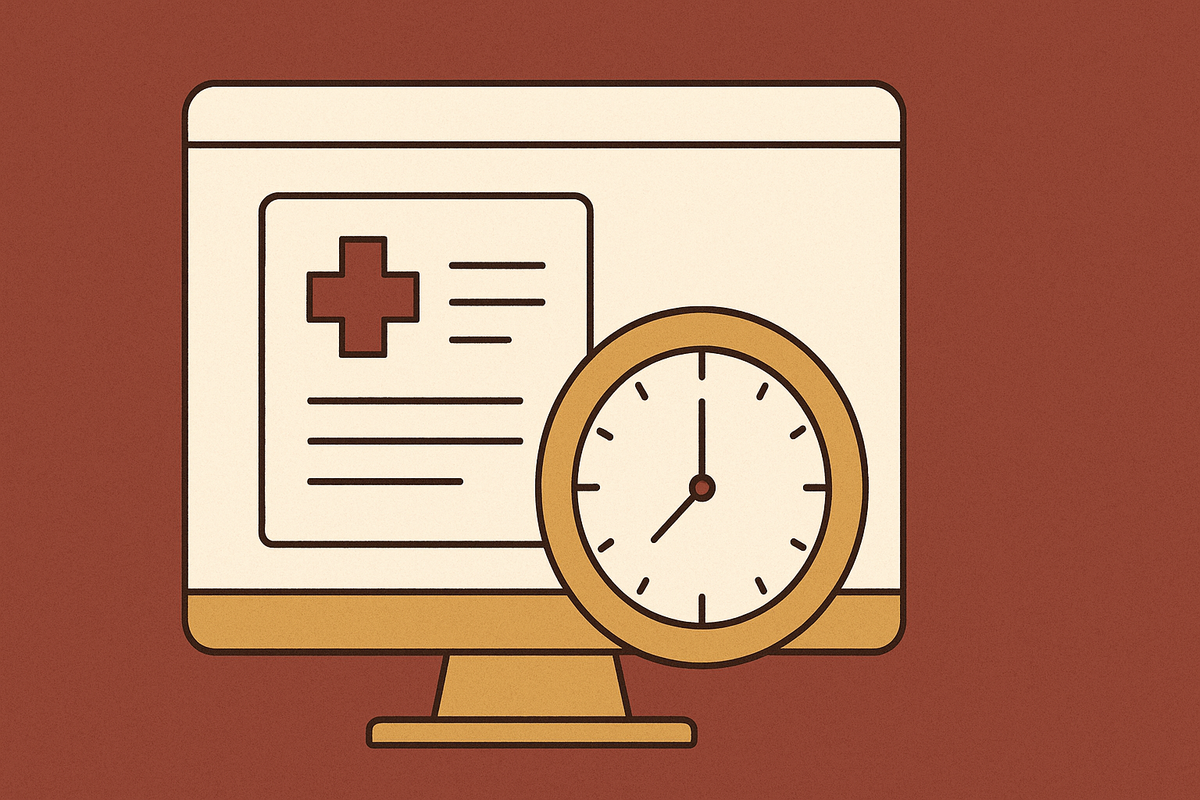
Self-reporting in long-term care is not a single obligation but two separate systems operating on different timelines, with different mechanisms and different ways of failing. The first operates at the facility level: MDS assessments, Payroll-Based Journal staffing data, and incident logs, all submitted as formal regulatory records to CMS and state agencies. The second operates at the clinician level, inside the electronic health record, where nursing notes, progress notes, and care plans get entered as internal documentation that shapes clinical decisions and increasingly feeds external regulatory scoring as well. Facilities that treat these as a single compliance task tend to miss how differently each one behaves under scrutiny. The legal architecture underneath both streams, codified in 42 CFR Part 483, Subpart B, has governed nursing home survey requirements since 1989, and it directly produces the machinery that converts what facilities self-report into survey decisions, which has changed substantially: CMS incorporated revised LTC Surveyor Guidance into the ASPEN system beginning February 24, 2025, and updated its Long-Term Care Survey Process (LTCSP) Resources folder effective February 3, 2026. Regulatory submissions get aggregated into the quality metrics and star ratings that determine a facility's survey track before a surveyor ever arrives on site, while clinical notes become the evidence surveyors examine once they're in the building, and increasingly the raw material predictive models use to surface or obscure resident risk. Both levels now determine survey outcomes, but a facility that only manages one of them is managing half the system.
CMS's Risk-Based Survey Process and Self-Reported Data
Aggregate self-reported data now functions as a qualifying threshold for a far lighter survey experience, which turns documentation quality into a competitive advantage before any inspection begins. CMS announced nationwide implementation of the Risk-Based Survey process for qualifying nursing homes beginning September 8, 2026, detailed in QSO-26-14-NH: the RBS is a modified version of the standard LTCSP that still covers every required area but does so with fewer activities, a smaller resident sample, roughly half the time on site, and fewer surveyors assigned. Qualification depends on criteria that are almost entirely products of a facility's own reporting history. A facility needs less than a 5-star overall rating or a staffing rating below 3 stars, a health inspection score at or below the state's 50th percentile, and no failed PBJ audits or MDS data errors. Failed PBJ audits and MDS data errors function as hard disqualifiers rather than soft risk factors. A single data-entry failure in a staffing submission can remove a facility from consideration regardless of its clinical performance. Qualification is also not permanent. Complaints, facility-reported incidents, new citations, staffing waivers, and ownership changes can strip a facility of its RBS status after it has already appeared on a quarterly qualifying list, which turns compliance into a year-round documentation obligation rather than a periodic one. The gap between a facility inside that 12% and one outside it is not a matter of degree. A shortened, lower-intensity review versus the full weight of the standard survey process is set entirely by data the facility itself generates and submits.
State-Level Annual Reporting Requirements
Federal RBS qualification sits on top of a separate layer of obligation: state-level annual reporting, which carries its own legal deadlines and its own penalties, and which feeds back into the same quality picture CMS relies on. Illinois requires facilities to complete an Annual Long-Term Care Questionnaire under the Illinois Health Facilities Planning Act, covering facility utilization data, staffing full-time-equivalents, admissions and discharges, and financial information, with the 2025 cycle due April 30, 2026, and fines assessed for every 30-day period of non-response once an initial 30-day grace period following a formal written request has passed. Maryland runs a parallel system under COMAR 10.24.03, requiring accurate, timely, and complete data from nursing homes, chronic care facilities, and assisted living providers, with deadlines that vary by facility type: Comprehensive Care submissions are due April 21, 2026, while Chronic Care and Assisted Living submissions are due May 21, 2026, and the resulting data feeds into the State Health Plan and broader financial health assessments. Illinois and Maryland are not exceptions; they illustrate a pattern that recurs across states with their own annual survey instruments. What matters is that these state surveys collect largely the same categories of information that underpin CMS star ratings: staffing, capacity, utilization, financials. A facility whose internal data infrastructure is weak will struggle to report accurately at both levels at once. A facility that stumbles on a state annual submission, or reports a number at the state level that doesn't match what it submitted federally, creates a discrepancy that a surveyor can identify and pursue on site. Reporting obligations layer rather than substitute for one another, and a gap at either level becomes visible at both.
Clinician-Level Documentation Quality as the Weakest Link
Every regulatory data product sitting above the bedside, MDS scores, quality indicators, incident logs, depends on the consistency of nursing documentation, and that documentation is produced under conditions that make consistency difficult to sustain. Prior research found that nurses must document between 631 and 875 unique data points during a single shift, a volume large enough to create conditions for omission, templating, and vague language even among nurses who are conscientious about their charting. That volume translates into time: nurses spend roughly 40% of a shift on documentation, a burden CMS itself has tried to address through regulatory simplification efforts predating AI tools. The financial consequences of that burden are direct rather than abstract. Vague or templated clinical documentation is one of the most common triggers for claim denial and audit recoupment in the SNF setting, the direct link between nurse-level charting quality and facility-level financial exposure. The problem compounds at transition points, where incoming information is often already incomplete. As of 2018, only roughly half of hospitals engaged in all four domains of interoperability, finding, sending, receiving, and integrating patient information electronically, with outside providers, and hospitals exchanged information with nursing homes far less often than they did with other hospitals or ambulatory providers. Residents frequently arrive at a facility with incomplete records, and nurses have to reconstruct clinical history from scratch rather than inherit it. None of this makes the burden unsolvable. UCHealth demonstrated as much: using Epic NEAT data and Epic's Efficiency Workbook, a team of nursing informaticists, analysts, and frontline nurses redesigned documentation workflows to identify and remove unnecessary charting steps, saving meaningful time per nurse per day. The lesson from that case is that burden reduction is achievable when workflow redesign is led by data and built with the nurses who do the charting, not imposed on them.
Risk Signals in Unstructured Clinical Notes
The free-text narrative inside a nursing note carries clinical signal that structured EHR fields do not capture, and that signal, once extracted, predicts resident deterioration and regulatory risk with measurable accuracy. Natural language processing techniques are increasingly applied to pull structure out of that unstructured text, improving documentation accuracy and supporting data-driven decisions in ways that checkbox fields alone cannot. The evidence for this is no longer speculative; it has been validated in peer-reviewed research. One PMC-published study validated an NLP algorithm against CMS-mandated MDS assessments and extracted cognitive test scores with 97% accuracy for the MoCA and near-perfect accuracy for the MMSE, scores that correlated well with the clinical assessments CMS-mandated already requires, with direct implications for identifying patients with varying degrees of cognitive impairment in EHR-based research. A separate application of machine learning NLP to nursing notes and discharge summaries, built to predict 30-day rehospitalization among heart failure patients, produced a best-model area under the curve of 0.85 and an F₁ score of 0.80, a result that demonstrates unstructured notes carry predictive power that structured fields alone do not provide. A third study, published in Infection Control & Hospital Epidemiology by Goodman and colleagues from the University of Maryland and Johns Hopkins in 2024, found that most hospital EHRs lack any dedicated field for long-term care facility exposure, and applied NLP to close that gap, identifying LTCF-exposed inpatients without requiring manual chart review. The implication for long-term care facilities follows directly from these findings. A facility that fails to systematize the quality of its notes forfeits predictive power that is already sitting inside its own documentation, power that internal care teams and external surveyors alike could otherwise draw on to assess resident risk.
Predictive Analytics Built on Self-Reported EHR Data
Once self-reported clinical data is produced systematically rather than haphazardly, it becomes usable as the raw material for predictive models that let facilities address resident risk before it turns into a surveyor's citation. EHR data already supports stratifying residents into high, medium, and low risk groups, with that stratification used to generate individualized continuum-of-care plans, an internal triage logic that mirrors the external risk-sorting CMS applies through RBS. The scale at which this works has been demonstrated directly. PointRight's RADAR platform offers a concrete illustration of the category in practice: it applies resident-level descriptive and predictive analytics in real time to both short-stay and long-stay residents, and ArchCare used that predictive capability to identify patients likely to experience an ER transfer, reducing hospital readmissions as a result. What connects these implementations is a shared dependency. None of them function without nursing documentation that is consistent, complete, and structured or at least structurable, which places the burden back on the quality of what gets entered at the point of care. Facilities using EHR-derived analytics to anticipate problems before they escalate are, in effect, doing internally what CMS is now incentivizing externally through RBS, and the two logics are converging into a single system of self-reporting quality rather than remaining two separate obligations.
What a Documentation and Incident Reporting Protocol Must Contain
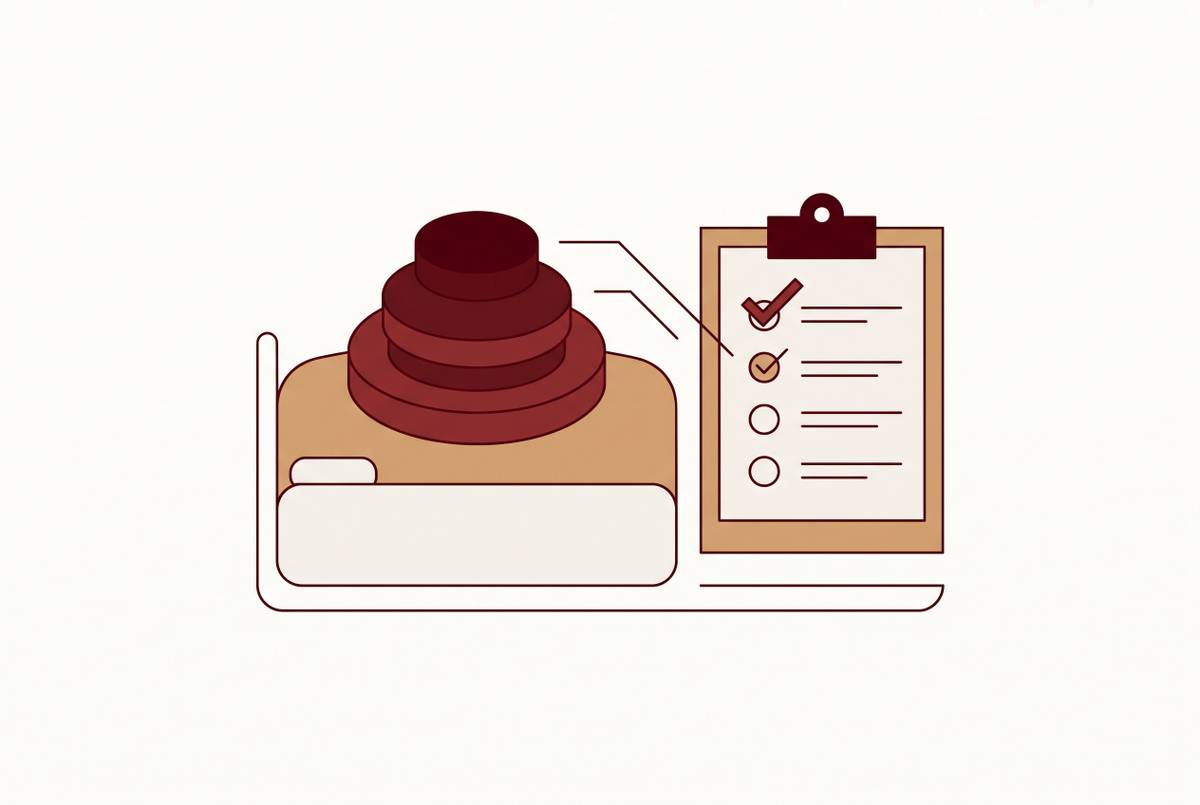
A protocol that actually moves the needle on survey outcomes has to be built around the specific data products that feed regulatory scoring, not around generic documentation best practices. The incident categories that drive the most regulatory exposure, falls, medication errors, hydration, skin wounds, and behavioral changes, are the same categories that appear most often in survey citations and that predictive models are trained to detect, and a protocol that treats them the same as routine daily notes will miss the specificity surveyors are trained to look for. On the regulatory submission side, a protocol must address assessment accuracy and timeliness, since errors there are hard disqualifiers for RBS eligibility and directly affect quality measure scores, and it means treating submission completeness as non-negotiable, since a failed audit is an explicit RBS disqualifier on its own. It also means keeping incident log documentation aligned with what nursing notes actually record, because a discrepancy between the two is precisely the kind of inconsistency surveyors are trained to find. State annual survey data belongs in the same protocol rather than treated as a separate compliance track, since facilities in states such as Illinois and Maryland face hard deadlines and real fines for non-compliance, and that data has to remain internally consistent with whatever gets submitted federally. On the clinical documentation side, the protocol has to push for specificity over templating, since vague or copy-pasted language in nursing notes is the documentation failure most directly tied to claim denial, audit recoupment, and surveyor skepticism. It also has to enforce continuity across shifts, because a risk signal that appears in one note and disappears from the next is exactly the pattern surveyors read as a failure to monitor. A protocol built around these specific points, rather than around documentation in the abstract, is what connects the quality of a nurse's charting at 2 a.m. to the survey track a facility lands on months later.
Sources
- annual long-term care questionnaire for 2025 - HFSRB
- Long Term Care Survey
- Skilled Nursing Update: CMS Implements Nationwide Risk-Based Surveys For Higher-Performing Skilled Nursing Facilities
- DEPARTMENT OF HEALTH & HUMAN SERVICES Centers for Medicare & Medicaid Services
- Revision History for LTC Survey Process Documents and Files
- Data Analytics and Predictive Modeling’s Role in Identifying High Risk Patients and Optimizing Care Plans